
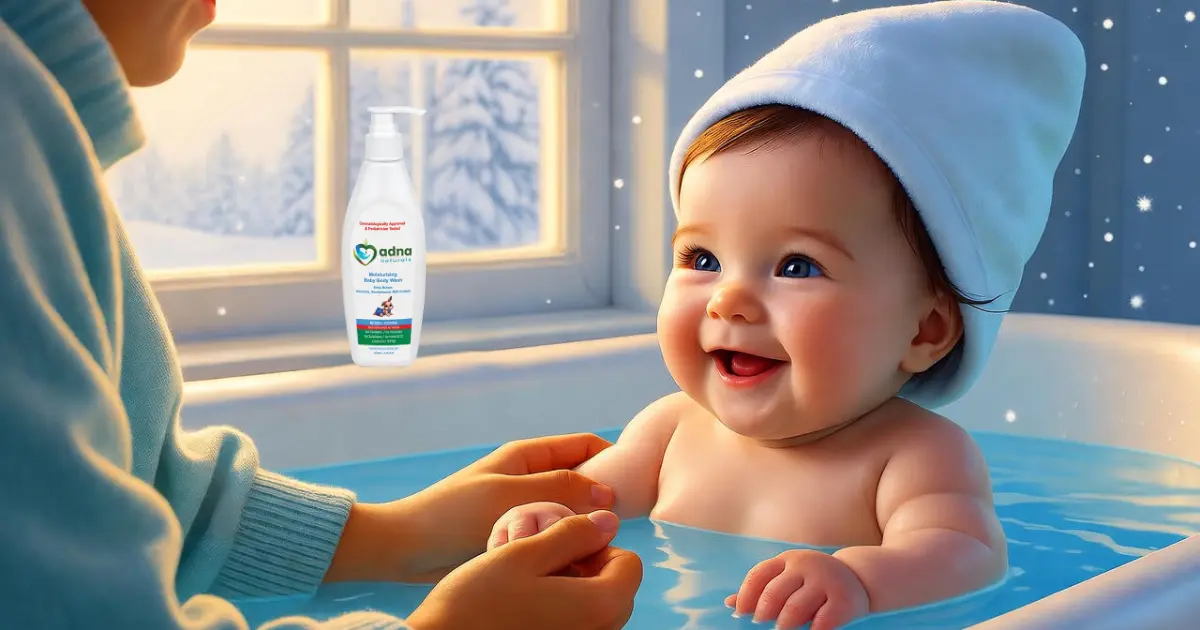
Winter can be especially harsh on your little one’s delicate skin. As temperatures drop and indoor heating kicks in, moisture evaporates quickly from the skin surface. Babies’ skin is much thinner and loses water more rapidly than adult skin, which makes baby winter skin care not just an option but a necessity.
Bath time may feel like a relaxing moment, but if you’re using the wrong product or routine, you could actually be triggering dryness, peeling, redness or irritation before the cream even gets applied. The key? Switching to a moisturising baby body wash that supports the skin barrier rather than stripping it.
One of the best allies in this process is almond oil. An almond-oil enriched body wash works on two fronts: it cleanses gently and supports barrier repair precisely what infant skin needs in cold, dry months.
This complete guide will help you build a winter-safe bath routine, understand how almond oil helps, and choose the right product for baby dry skin in winter including what to look for when shopping for an almond oil baby body wash.
Why Winter Hits Baby Skin Hard
Dry Air Outside and Indoors
When cold air meets heated indoor air, it creates a double challenge: low humidity outdoors plus dry indoor heating. This combination draws moisture from the top layer of skin, causing tightness, flaking and rough patches. Babies’ oil glands are immature, so they can’t replenish as quickly as adults.
Higher Transepidermal Water Loss (TEWL)
Infant skin is thinner and more permeable which means water escapes more easily. In winter, this effect is magnified: the skin barrier weakens faster, leading to visible signs like micro-cracks, irritation and sometimes flare-ups of eczema or dermatitis.
How Almond Oil Makes a Difference in Winter
In the context of baby winter skin care, almond oil stands out for a few important reasons:
- Moisturising without greasiness: Almond oil’s fatty acid profile mimics natural skin lipids, making it absorb well without leaving a heavy film. This is ideal when layered clothing and indoor heating already challenge the skin’s comfort.
- Soothing and calming: The cold wind, friction from fabrics (like wool) and dry indoor air all cause micro-inflammation. Almond oil helps calm redness and soothe sensitive patches.
- Barrier-repair nutrients: Vitamin E, Vitamin A, zinc and potassium are among the nutrients present in almond oil that support the skin’s structural resilience. By reinforcing the skin’s barrier, it reduces moisture loss and improves texture.
In short, using an almond oil baby body wash is one of those simple upgrades that makes a real difference for winter-skin health.
Winter Bath Routine: Best Practices for Babies
To turn your bath time into a skin-protective moment (not a skin stress moment), follow these pediatric-approved steps:
- Limit bath time to just 5-10 minutes. The longer the exposure, the more oils are stripped.
- Use lukewarm water, never hot. Hot water dissolves protective lipids and speeds up water loss.
- Have the product ready beforehand and apply the wash to your palms, not directly onto the baby’s skin.
- Gently massage the wash in circular motions for 3-4 minutes.
- Rinse lightly to avoid over-rinsing until the skin feels tight or squeaky.
- Pat dry with a soft cotton towel, leaving a fine trace of moisture on the skin. Do not rub.
- Within 2–3 minutes, apply a rich cream or balm to lock in the moisture. This is the most critical window.
- Maintain indoor humidity between 40–60% with a humidifier.
- Dress your baby in breathable layers (cotton base layer under wool) to reduce friction and maintain warmth without irritating skin.
- Consider a gentle daily baby massage with almond oil this supports circulation, elasticity and skin barrier strength.
What to Look for in a Good Moisturising Baby Body Wash
When choosing a product for baby dry skin in winter, especially a wash, keywords matter less than formulation. Here’s what an ideal moisturising baby body wash should include:
- Cold-pressed sweet almond oil listed high in the ingredients (not buried at the end).
- Free from sulfates, parabens, mineral oil, alcohol and synthetic fragrance.
- pH-balanced for infant skin (around 5.5).
- Clearly labelled tear-free, hypoallergenic, dermatologist-tested.
- Preference for a creamy or milky texture, rather than a gel or heavy foam, since those may strip oils.
- For winter use: it should feel and rinse like a gentle nourishing cleanse, not a “deep-clean” harsh scrub.
Here are a few types of washes you’ll find:
- Cream-based almond oil cleanser – ideal for very dry climates or infants with peeling/chapped skin.
- 2-in-1 shampoo + body wash with almond oil – handy to shorten bath time and limit water exposure.
- Sensitive-skin almond oil washes – look for “barrier repair”, “eczema-safe” or “clinically tested for sensitive skin”.
- Foam washes with almond extract – suitable if the baby dislikes lather, but only if they’re truly mild and sulphate-free.
- Budget-friendly almond oil washes – affordable can work well if format and ingredients are clean; avoid ones where almond oil is the last trace ingredient.
Putting It All Together: Winter Bath Routine for the Baby
Here’s how to integrate all the elements for effective winter-care:
- Warm the baby’s room before undressing so they’re not exposed to a cold draft.
- Fill up a bath with lukewarm water.
- Apply a small amount of the almond oil-enriched body wash to your hands and gently wash the baby’s body and any patches of dryness.
- Rinse gently.
- Pat dry with a soft towel, leaving the skin slightly damp.
- Immediately apply a rich cream or balm (ideally one that complements the almond oil wash) to lock in moisture.
- Dress baby in cotton base layer + suitable outer layer; run a humidifier in the room; avoid fabric friction.
- If you like, finish with a 2-minute gentle massage with almond oil excellent for circulation and barrier support.
- Monitor skin for signs of irritation, especially around cheeks, elbows, knees and under wool layers.
- On outdoor days (even in winter), apply baby-safe sunscreen to exposed areas reflective surfaces like snow, water or ice can bounce UV.
Common Mistakes that Undermine Winter Baby Skin Care
- Long, hot baths: feel cozy but they strip natural oils and accelerate water loss.
- Using scented or harsh cleansers: fragrance, menthol, alcohol and dyes may inflame already compromised winter skin.
- Skipping moisturizer right after bath: waiting even a few minutes reduces effectiveness drastically; sealing in immediately is key.
- Scrubbing with towels: rubbing causes micro damage; always pat dry.
- Assuming no sun protection is needed in winter: UV reflection still matters, so apply baby-safe sunscreen for outdoor exposure.
Why This Matters for You and Your Baby
This isn’t about just selling a product or following a trend. It’s about recognising that winter conditions create a structural challenge to infant skin. That’s why the right body wash matters, not just your cream. The wash is the first barrier. If that fails, the best lotion gets compromised. Investing in a proper moisturising baby body wash enriched with almond oil and applying it in a winter-smart routine means fewer red patches, less dryness, more comfort for the baby and peace of mind for you.
FAQs
1. Is almond oil safe for infants during winter?
Yes, when used in mild, pediatric approved formulations, almond oil supports hydration, barrier repair, and irritation control, all of which are needed in dry climates.
2. How often should I bathe a baby in winter?
2–3 baths per week are sufficient for most infants in winter. Daily sponge cleaning is enough between full baths.
3. Can I use regular baby wash instead of almond-infused wash in winter?
Most standard washes are not designed for low humidity months and may increase dryness. A moisturizing wash with almond oil is better suited for winter exposure.
4. When should moisturizer be applied after using an almond-oil wash?
Within 2 – 3 minutes after pat drying. Delayed application reduces effectiveness significantly.
5. Are almond oil washes suitable for eczema-prone babies?
Yes, if the formula is free of fragrance and irritants. Always patch test and consult a pediatrician for diagnosed eczema.