
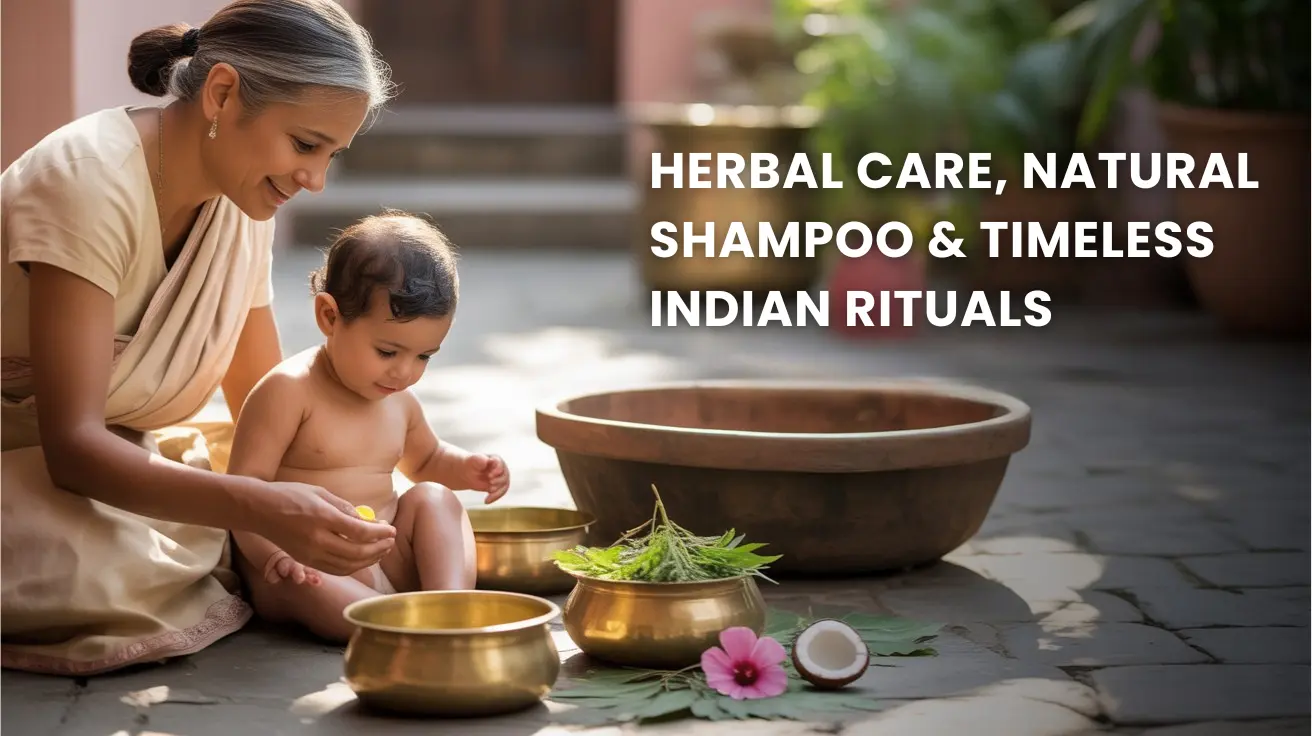
For generations, traditional baby bath practices have been more than just a part of daily hygiene. They’ve been a celebration of love, protection, and bonding – an age old ritual where every touch carried a blessing. Remember those stories of NaniMaa sitting in the courtyard, preparing herbal pastes, oils, and powders with care? Her gentle hands would blend the essence of nature from hibiscus petals to reetha and amla to create the perfect herbal baby shampoo that not only cleaned but also protected a baby’s tender scalp.
Those moments weren’t hurried. They were soulful, filled with laughter, lullabies, and lessons whispered softly into the baby’s ears. In many Indian baby care traditions, bath time was sacred and believed to nurture not just the body, but the spirit.
The Legacy of Traditional Baby Bath Practices
When we talk about traditional baby bath practices, we’re not just revisiting nostalgia. We’re acknowledging a science deeply rooted in Ayurveda and cultural wisdom. The elders always knew a baby’s skin and scalp were too delicate for harsh chemicals. So, they turned to nature’s lab.
These age-old baby bath time rituals involved using ingredients easily found in Indian homes, neem leaves for purification, turmeric for healing, and tender coconut oil for nourishment. Every region had its own version, but the soul remained the same: “Nature knows best.”
Even today, many parents are returning to these methods. Why? Because they’re realizing that what’s pure, gentle, and rooted in tradition often works better than anything bottled with promises.
What Makes Traditional Baby Bath Time So Special?
It’s easy to dismiss these customs as “old school,” but pause for a moment. Have you ever noticed how babies slept better after these baths? Or how they rarely faced dryness or rashes? The reason lies in the balance of natural baby hair care and body nourishment these rituals ensured.
Let’s break it down:
| Aspect | Traditional Practice | Benefit |
| Hair Care | Herbal shampoo made from hibiscus, amla, and shikakai | Strengthens scalp and promotes soft hair |
| Massage Oils | Sesame, coconut, or almond oil warmed slightly | Improves blood circulation and bone strength |
| Cleansing | Gram flour (besan) with turmeric and milk | Gently cleanses without stripping natural oils |
| Protection | Neem and tulsi infusions | Antibacterial and calming for baby skin |
| Bonding | NaniMaa or Amma’s gentle massage before bath | Builds emotional connection and trust |
Each step reflected mindfulness from choosing ingredients to the temperature of the water. The process was slow, rhythmic, and full of intention, something modern life often forgets.
Reviving Herbal Baby Shampoo Traditions
In today’s fast-paced world, many parents are rediscovering the value of herbal baby shampoo. These aren’t just “chemical-free” alternatives. They carry forward a heritage that values purity. Unlike synthetic shampoos filled with sulfates and parabens, traditional cleansers like reetha and shikakai gently cleanse without irritation.
Think back to how your grandmother would soak reetha overnight, boil it with hibiscus leaves, and use the cooled mixture to wash your scalp. The same logic applies to babies whose hair deserves the same gentle, natural touch.
This return to roots isn’t about being old fashioned, it’s about being wise. And it’s heartening to see a new generation of parents adopting natural baby hair care routines rooted in tradition.
Indian Baby Care Traditions That Still Matter
Every Indian household has its baby care stories passed down from mothers, aunts, and grandmothers. These Indian baby care traditions form a blend of practical care and emotional warmth.
Here are some gems that continue to make sense even today:
- Morning Sunlight Bath: A few minutes of gentle sunlight helps vitamin D absorption.
- Oil Massage Before Bath: Known as Abhyanga, this Ayurvedic ritual boosts immunity.
- Use of Besan & Milk: Acts as a natural cleanser and moisturizer.
- Post-Bath Wrapping: Babies were swaddled in soft cotton to retain warmth and security.
- Hair Oiling with Coconut or Castor Oil: Strengthens roots and improves scalp health.
When modern parents look for “organic” or “chemical-free” products, they’re unknowingly searching for what these customs already offer.
Why Modern Parents Are Returning to Baby Bath Rituals
There’s something undeniably soothing about the old ways. In the chaos of modern parenting with its endless to do lists and screens, traditional baby bath practices offer a sense of calm and connection.
Imagine a quiet morning, warm sunlight streaming in, your baby cooing as you gently pour herbal water on their little feet. It’s not just about cleanliness. It’s about creating memories, sensory comfort, and emotional safety. Isn’t that what parenting is all about?
And let’s not forget science now backs much of this wisdom. Ingredients like turmeric, aloe vera, and neem are proven to have antibacterial, anti-inflammatory, and moisturizing properties. Ayurveda got it right centuries ago.
“Every drop poured in a baby’s bath was once a blessing – not just water, but love made visible.”
How to Incorporate Traditional Practices in Modern Life
You don’t have to give up convenience to return to tradition. Here’s a simple way to blend both worlds:
- Choose Herbal Products Wisely – Look for trusted brands using traditional ingredients.
- Make DIY Blends – Mix gram flour with turmeric and milk once a week.
- Revive Weekly Oil Baths – A gentle coconut oil massage before bath strengthens muscles.
- Set a Ritual Time – Consistency builds comfort; pick mornings for calmness.
- Sing or Talk During Bath – Just like NaniMaa did, your voice is your baby’s comfort.
You don’t need perfection – just presence. Let bath time be a pause, not a task.
The Emotional Value Behind the Ritual
Ask anyone raised in a traditional home, and they’ll tell you baby bath time wasn’t rushed. It was an event. The family would gather around, someone would sing, someone would hand over warm towels, and amidst all that love, a baby learned their first lessons of trust and comfort.
That’s what traditional baby bath practices represent not just hygiene, but heritage. They remind us that raising a child isn’t about speed, but about soul.
FAQs on Traditional Baby Bath Practices
Q1: Are traditional baby bath ingredients safe for newborns? Yes, when prepared correctly. Always consult your pediatrician before introducing any new ingredient. Use gentle herbs and oils suited for sensitive skin.
Q2: Can I make my own herbal baby shampoo at home? Absolutely. Boil reetha, hibiscus, and amla, let it cool, strain, and use. Always test a small patch before applying.
Q3: How often should I follow traditional bath rituals? Most families practiced them daily or every alternate day, depending on climate. In cooler regions, 3 – 4 times a week works well.
Q4: What’s the best time for baby baths? Morning baths align with Ayurveda’s belief in energizing the body and soothing the mind.
Q5: Can I mix modern baby products with traditional ones? Yes, but ensure they’re gentle and chemical free. The goal is harmony, not conflict.
Conclusion: Returning to Roots, Embracing the Future
Traditional baby bath practices are more than just routines; they’re love stories woven into every touch, every drop, every lullaby. As parents, choosing these rituals isn’t about nostalgia alone; it’s about offering your child the same tenderness that raised generations before.
So next time you prepare your baby’s bath, think of NaniMaa’s quiet smile, her hands mixing those herbal powders. In that act, you’ll find not just care, but connect a bridge between the past and your baby’s bright, beautiful tomorrow.