
Caring for a baby’s hair and scalp is very different from adult hair care. A baby’s scalp is thinner, more sensitive, and still developing its natural protective barrier. Add India’s diverse climate—humidity, monsoons, dry heat, pollution—and it becomes even more important to follow a gentle, well-informed hair care routine.
This comprehensive guide walks parents through how often to wash baby hair, climate-specific care tips, safe post-wash practices, and most importantly, how to choose the right baby shampoo that cleanses effectively without harming delicate skin.
Understanding Baby Hair and Scalp Sensitivity
A baby’s scalp produces significantly less oil than an adult’s. This means it can dry out easily if exposed to harsh cleansers, sulfates, or frequent washing with unsuitable products. Many babies also experience temporary conditions such as cradle cap, mild dryness, or sensitivity, all of which require extra-gentle care.
Because babies cannot communicate discomfort easily, using safe, clinically tested, and pediatrician-approved products becomes essential—not optional.
How Indian Climate Affects Baby Hair Care
India’s weather varies widely across regions, and each climate brings unique challenges for baby hair and scalp health.
High-Humidity Cities (e.g., Kolkata, Mumbai, Chennai)
In humid environments, babies tend to sweat more, especially around the scalp and neck area. Sweat combined with dust and pollution can lead to sticky hair, clogged pores, and discomfort if not cleaned regularly.
Recommended routine:
- Shampoo every alternate day
- Use a mild, sulfate-free baby shampoo
- Avoid heavy oils before washing
Moderate or Dry Monsoon Climates (e.g., Pune, Bengaluru)
In comparatively drier monsoon conditions, overwashing can strip the scalp of its natural moisture.
Recommended routine:
- Shampoo twice a week
- Focus on gentle cleansing and hydration
- Avoid daily shampooing unless advised by a pediatrician
Why Choosing the Right Baby Shampoo Matters
Many parents unknowingly use products that are “baby-branded” but still contain harsh foaming agents, artificial fragrances, or unnecessary chemicals. These ingredients can cause dryness, irritation, or long-term scalp sensitivity.
An ideal baby shampoo should:
- Be tear-free
- Be sulfate-free (SLS/SLES-free)
- Contain natural, soothing ingredients
- Be clinically tested
- Be dermatologist and pediatrician approved
- Have zero tolerance to toxins
Introducing a Safer Cleansing Option for Babies
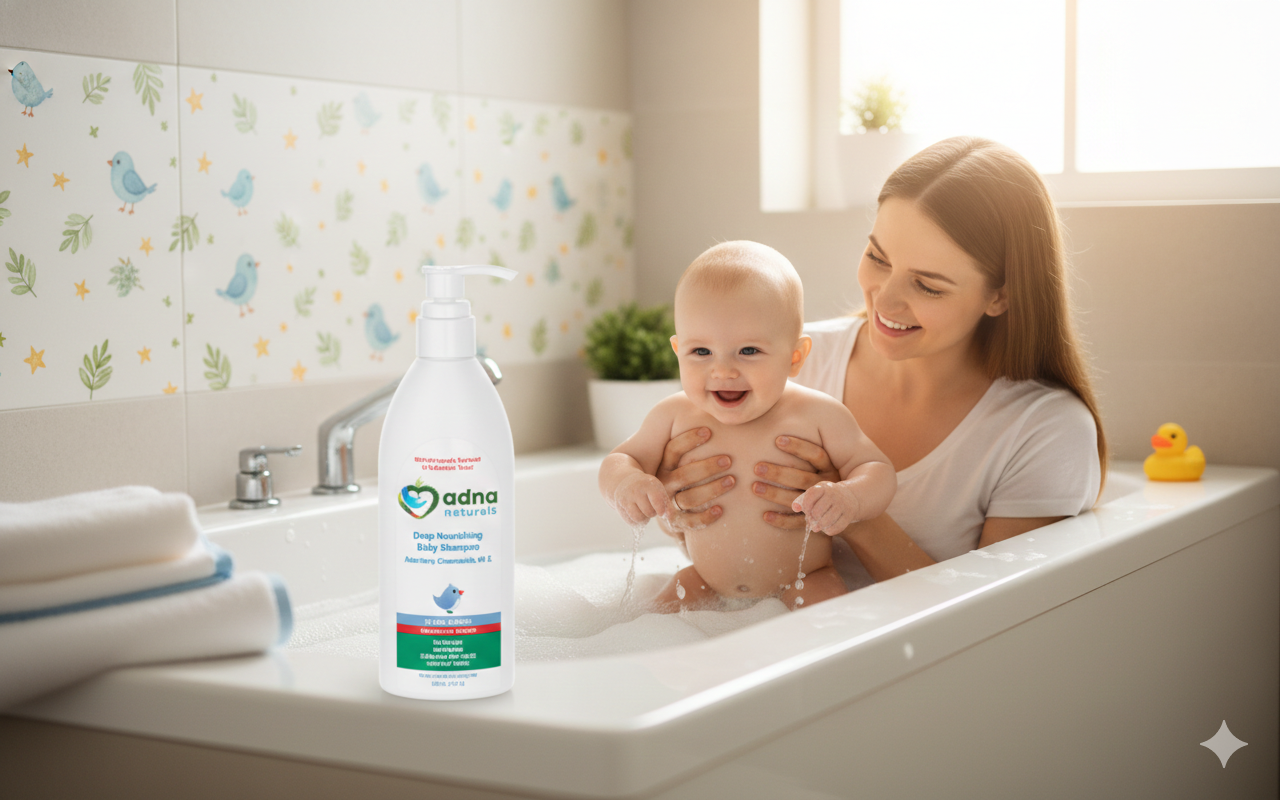
ADNA Naturals Deep Nourishing Baby Shampoo is formulated keeping all these requirements in mind. It is designed to gently cleanse while nourishing the scalp and protecting delicate baby hair.
Key Ingredient Benefits
- Aloe Vera: Helps soothe the scalp and maintain hydration
- Chamomilla: Known for calming and anti-inflammatory properties
- Hibiscus: Supports hair softness and scalp comfort
- Olive Oil: Helps lock in moisture and prevent dryness
- Vitamin E: Nourishes and protects against environmental stressors
The shampoo is clinically tested, dermatologist approved, and pediatrician tested, making it suitable for regular use.
It is also:
- No Tears – ensuring a stress-free bath time
- Sulfate-free (no SLS/SLES)
- Free from parabens, silicones, and mineral oil
Step-by-Step Baby Hair Washing Routine
Step 1: Prepare for the Wash
- Use lukewarm water
- Ensure the room is warm and draft-free
- Keep all essentials ready to avoid rushing
Step 2: Gentle Shampoo Application
- Wet your baby’s hair thoroughly
- Take a small amount of ADNA Naturals Deep Nourishing Baby Shampoo into your palm
- Gently massage the scalp using soft, circular motions
- Avoid rubbing or scratching the scalp
The mild formulation ensures effective cleansing without stripping natural moisture.
Step 3: Rinse and Cleanse Thoroughly
- Rinse with clean, lukewarm water
- Ensure no residue remains on the scalp
- Avoid directing water forcefully onto the face
The tear-free formulation ensures a comfortable and safe bathing experience.
Optional: Post-Wash Herbal Rinse (Occasional Use)
For parents who prefer incorporating traditional care methods, an occasional herbal rinse may be used:
DIY Herbal Rinse:
- 1 cup cooled green tea
- 5 drops tea tree oil
- 1 tsp hibiscus powder
Strain well and pour gently over the scalp. This step is optional and should not replace shampoo cleansing.
Step 4: Drying and Detangling with Care
- Gently pat dry with a soft muslin or cotton towel
- Avoid rubbing the hair
- Allow hair to air-dry naturally
- Use a wide-tooth wooden comb to detangle
This minimizes hair breakage and keeps the scalp comfortable.
Common Baby Hair Care Mistakes to Avoid
- Using adult shampoos – even mild ones are too harsh
- Overwashing – can lead to dryness and irritation
- Scrubbing the scalp – damages delicate skin
- Ignoring climate needs – frequency should change with weather
- Using products with sulfates or parabens
Building a Safe, Consistent Baby Hair Care Routine
Consistency matters more than complexity. A simple routine using the right product helps:
- Maintain scalp health
- Prevent dryness and irritation
- Keep baby hair soft and manageable
- Make bath time calm and enjoyable
Using a trusted, toxin-free shampoo ensures long-term scalp comfort and peace of mind for parents.
Why Parents Trust ADNA Naturals for Baby Care
ADNA Naturals focuses on clean, thoughtful formulations designed specifically for babies’ sensitive skin and hair. With carefully selected ingredients and strict safety standards, the Deep Nourishing Baby Shampoo supports everyday cleansing without compromise.
It offers parents the confidence of:
- Clinically tested safety
- Gentle yet effective cleansing
- A no-tears, no-toxins promise
Final Thoughts
Baby hair care should always prioritize gentleness, safety, and nourishment. By understanding climate needs, washing frequency, and ingredient safety, parents can protect their baby’s delicate scalp while ensuring comfort and hygiene.
Choosing a carefully formulated product like ADNA Naturals Deep Nourishing Baby Shampoo helps create a nurturing hair care routine that supports healthy scalp development—today and as your baby grows.
Because when it comes to baby care, every detail matters.