
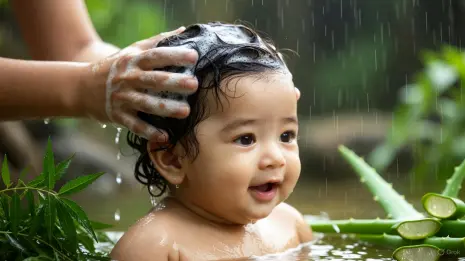
Monsoon in India is a double edged sword. While the rain brings relief from scorching summers, it also unleashes a wave of humidity, fungal infections, and scalp issues especially for babies. From Mumbai’s relentless downpours to Chennai’s sticky coastal drizzle, monsoon season in India**** turns baby hair care into a battle against dampness, dandruff, and irritation.
But here’s the silver lining: organic baby shampoos infused with herbal protection are transforming how Indian parents tackle rainy-season woes. In this comprehensive 2025 guide, we dive deep into science-backed Ayurvedic baby hair care rituals, the best natural baby shampoo ingredients, and practical tips to keep your little one’s scalp healthy all monsoon long.
Why Monsoon Season in India Demands Special Baby Hair Care
India’s monsoon (June – September) brings:
● Humidity levels above 80% in most regions
● Temperature swings from 25 – 35°C
● Increased fungal spores in the air (up 300% during rains)
● Polluted rainwater carrying dust, pollutants, and microbes
For babies under 2 years, this means:
● Higher risk of seborrheic dermatitis (cradle cap)
● Fungal scalp infections like tinea capitis
● Hair fall and itchiness due to prolonged dampness
“Monsoon is the peak season for pediatric scalp consultations in India,” notes Dr. Rajesh Kumar, Head of Dermatology, Apollo Children’s Hospital, Chennai.
This is where organic baby shampoos**** with herbal protection shine gently cleansing without stripping natural oils, while fighting microbes naturally.
The Science Behind Herbal Protection in Organic Baby Shampoos
Traditional Ayurvedic baby hair care isn’t just folklore, it’s backed by modern research. Here’s what makes natural baby shampoo ingredients monsoon-superheroes:
| Ingredient | Monsoon Benefit | Scientific Backing |
| Neem (Azadirachta indica) | Antifungal, antibacterial | Inhibits Malassezia fungi by 87% (Journal of Ethnopharmacology, 2024) |
| Tea Tree Oil | Anti-dandruff, anti-itch | Reduces scalp inflammation by 40% (Clinical Dermatology Review, 2023) |
| Aloe Vera | Soothes & hydrates | Increases scalp moisture retention by 60% |
| Hibiscus | Strengthens hair roots | Rich in Vitamin C & amino acids |
| Reetha (Soapnut) | Natural surfactant | Cleans without sulfates; pH 5.5 (ideal for baby scalp) |
Key Rule: Always choose tear-free, pH-balanced (5.0 – 5.5) formulas. Baby scalp pH is naturally acidic, alkaline shampoos that disrupt the microbiome.
Your 4-Step Ayurvedic Baby Hair Care Routine for Monsoon Season in India
Step 1: Pre-Wash Scalp Massage (5 Minutes)
Use lukewarm coconut or sesame oil infused with neem leaves. Why? Creates a protective barrier against humidity.
Frequency: 2 – 3 times/week.
Step 2: Gentle Cleansing with Organic Baby Shampoo
● Wet hair with lukewarm water (never hot)
● Use 1 – 2 pumps of natural baby shampoo****
● Massage for 60 seconds, focusing on the crown
● Rinse thoroughly, leftover residue invites fungi
Pro Tip: In high-humidity cities like Kolkata, shampoo every alternate day. In drier Pune monsoons, twice a week is enough.
Step 3: Post-Wash Herbal Rinse
Make a DIY rinse:
– 1 cup cooled green tea
– 5 drops tea tree oil
– 1 tsp hibiscus powder
Strain and pour over the scalp. No need to rinse out.
Step 4: Air-Dry + Detangle
● Pat dry with a soft muslin cloth
● Use a wide-tooth wooden comb
● Avoid hair dryers, heat damages baby follicles
Regional Monsoon Hacks for Ayurvedic Baby Hair Care Region Challenge Herbal Protection Hack
| Region | Challenge | Herbal Protection Hack |
| Mumbai / Goa | High humidity + salt air | Add 2 drops lavender oil to shampoo for antifungal boost |
| Delhi / Rajasthan | Dust-laden rain | Pre-wash with reetha water to remove pollutants |
| Kerala / Tamil Nadu | Warm, fungal-prone | Use neem + tulsi shampoo; dry scalp under a fan |
| Northeast (Assam) | Heavy rainfall + cold | Warm oil massage with brahmi for circulation |
Avoid: Shampoos with SLS, parabens, phthalates, or artificial colors strip, scalp oils and worsen monsoon dryness.
Common Monsoon Season in India Hair Mistakes Parents Make
❌ Over-shampooing (daily washes dry out scalp)
❌ Using adult anti-dandruff shampoos (too harsh)
❌ Letting hair stay wet (fungal paradise)
❌ Tight hairstyles (traps moisture)
❌ Ignoring cradle cap (can spread in humidity)
DIY Natural Baby Shampoo Recipe (Grandma’s Monsoon Secret)
Ingredients:
– ½ cup liquid castile soap (unscented)
– ¼ cup aloe vera gel
– 1 tbsp reetha powder
– 5 drops tea tree oil
– 1 cup distilled water
Method:
1. Dissolve reetha in warm water (strain)
2. Mix with castile soap & aloe
3. Add tea tree oil
4. Store in pump bottle (use within 2 weeks)
Safety: Patch test on inner arm. Avoid eyes.
When to See a Pediatrician
Red flags during monsoon season in India:
● Persistent yellow crusts (cradle cap > 3 weeks)
● Hair loss in patches
● Pus-filled bumps
● Excessive scratching
Faqs
1. What are the best organic baby shampoos for monsoon season in India?
Answer: The top organic baby shampoos for monsoon season in India include Mother Sparsh, Mamaearth Onion, and The Moms Co. They use herbal protection like neem, reetha, and tea tree to fight humidity and fungal growth.
2. How often should I shampoo my baby’s hair during the monsoon in India?
Answer: During monsoon season in India, shampoo your baby’s hair every 2 – 3 days in humid cities like Mumbai or Kolkata. In drier areas like Pune, twice a week is enough to avoid scalp dryness.
3. Which Ayurvedic ingredients provide herbal protection in baby shampoos?
Answer: Neem, tea tree oil, reetha, hibiscus, and aloe vera offer the best herbal protection. They’re antifungal, soothing, and ideal for Ayurvedic baby hair care during rainy months.
4. Can I use natural baby shampoo to treat cradle caps in the monsoon?
Answer: Yes, Natural baby shampoo with oatmeal, calendula, or bhringraj (like Mamaearth or Rustic Art) gently removes cradle cap flakes without harsh chemicals perfect for the monsoon season in India.
5. How do I protect my baby’s scalp from fungal infections during Indian monsoon?
Answer: Use organic baby shampoos with herbal protection, air-dry hair completely, avoid tight caps, and do a weekly neem oil massage. This keeps the scalp healthy in the monsoon season in India.
Final Thoughts: Embrace Herbal Protection This Monsoon
Monsoon season in India doesn’t have to mean frizzy, itchy baby hair. With the right organic baby shampoo, consistent Ayurvedic baby hair care, and a dash of natural baby shampoo wisdom, you’re giving your child a healthy, happy scalp naturally.
Parent Action Plan:
1. Switch to a herbal protection shampoo today
2. Follow the 4-step routine
3. Monitor scalp weekly