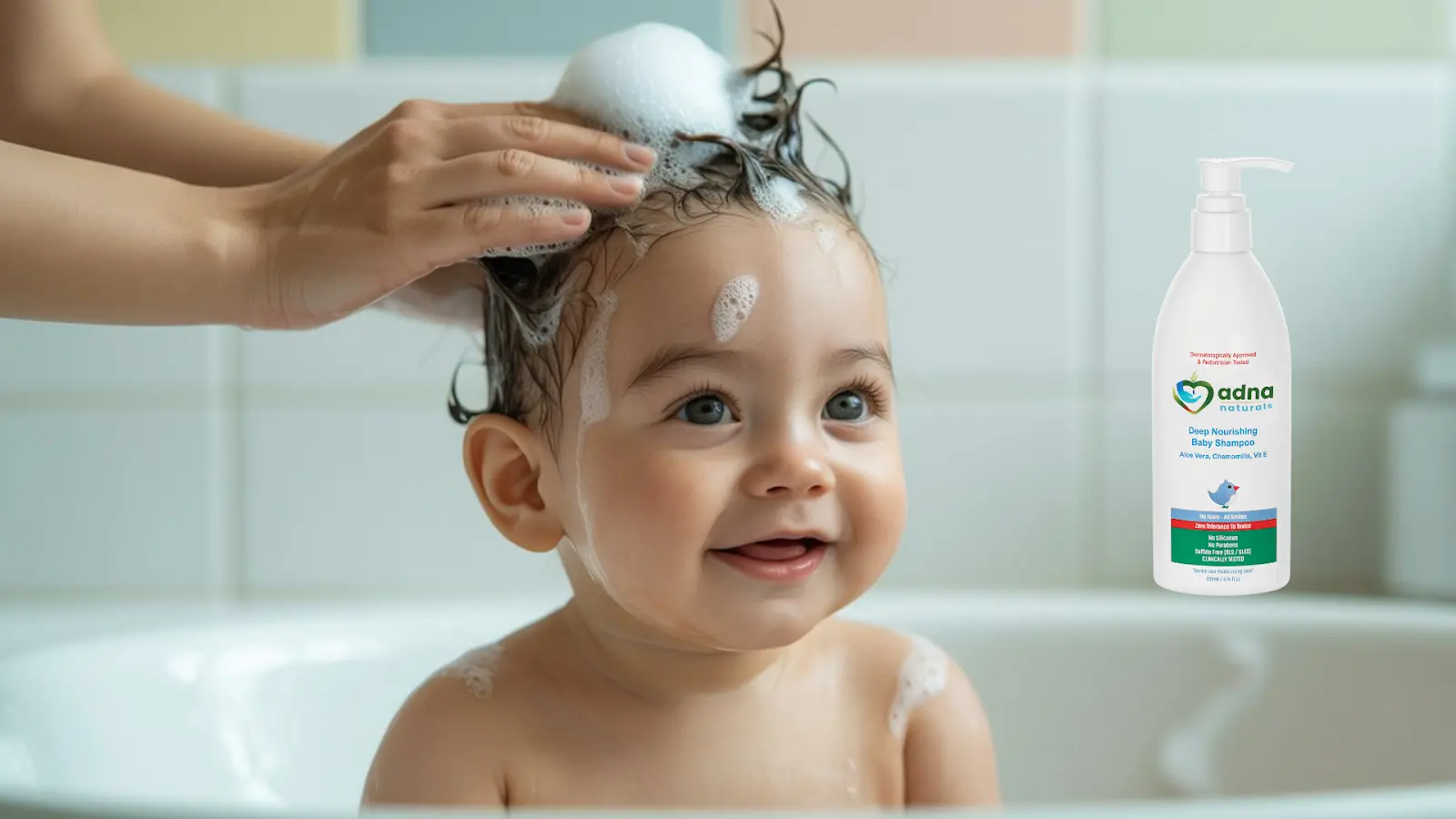
Baby shampoo is not “just another product.” The wrong formula can silently irritate a newborn’s scalp, trigger rashes, and even disrupt hormonal balance over time. That is why more parents today are actively searching for toxin free baby shampoo reviews before buying. Let’s unpack what actually matters for your baby’s skin safety and why toxin-free formulas like ADNA are redefining baby care.
Why Baby Skin Needs Extra Protection
Thin Barrier and High Absorption
A baby’s skin is up to 30 – 50% thinner than adult skin. That means whatever you apply including shampoo is absorbed faster and deeper.
Increased Risk of Irritation
The immature barrier means harsh cleansers can trigger dryness, itching, and micro tears in the scalp that go unnoticed until symptoms show.
Hidden Dangers in Regular Baby Shampoos
Sulfates (SLS/SLES) and What They Do
These are the foam boosting agents that make lather. They also strip natural oils, leaving skin dry and inflamed.
Parabens and Hormonal Disruption
Parabens mimic estrogen and are linked to endocrine imbalance, a major reason pediatric dermatologists advise against them for infants.
Artificial Fragrances and Allergic Reactions
“As little as 1 – 2% of babies develop fragrance-triggered dermatitis in the first year,” report pediatric dermatology case studies.
Dermatology-backed Risk Statistics
- 38% of infant rashes are linked to cosmetic products used in the first 6 months
- 24% of parents report redness or irritation within 48 hours of using fragranced baby shampoos (Clinical compilation Indian Journal of Pediatric Dermatology)
What Makes a Shampoo Truly “Toxin Free”
Ingredients to Avoid
- Sulfates (SLS, SLES)
- Parabens
- Phthalates
- Formaldehyde donors
- Synthetic dyes & perfumes
Safe Natural Alternatives That Work
Hing, fennel, calendula, oat extracts, aloe, glycerin all proven mild, tear-safe cleansers without stripping natural oils.
Why Parents Are Switching to ADNA
Clinical Testing for Zero-Tear and Zero-Toxin
Unlike “natural washed” branding, ADNA is lab tested for tear safety and free of dermatology flagged ingredients.
Vitamin E Nourishment & Scalp Microbiome Safety
Vitamin E reduces dryness, protects cell membranes, and helps retain moisture crucial for cradle cap prone babies.
Real Life Parent Testimonials (Review Lens)
Parent reviews consistently mention:
- “No irritations even on daily use”
- “Tear-free actually means tear free”
- “Not just gentle – scalp stays nourished”
(This section doubles as a conversion trigger for parents searching for toxin free baby shampoo reviews)
How Toxin-Free Shampoos Protect Long-Term
Prevents Eczema, Dandruff, and Dermatitis
Mild formulas reduce inflammation triggers and protect the barrier layer significantly cutting risk of long-term scalp conditions.
Supports Natural Barrier from Birth
By not stripping oils, toxin-free shampoos let the skin microbiome mature naturally.
How to Identify Greenwashing in Baby Products
Reading Labels vs. Reading Marketing
Words like “organic,” “baby safe,” “gentle” mean nothing legally. Check the full ingredient list, not front labels.
How to Use Baby Shampoo the Right Way
Frequency
2 – 3 times weekly is enough unless recommended otherwise.
Water Temp & Rinse Time
Using lukewarm water and rinsing completely residue is a bigger irritant than shampoo itself.
Buying Guide: What To Check Before Choosing One
Certifications
Look for dermatologically tested, hypoallergenic, and toxin-free certifications rather than vague natural tags.
Age Suitability & pH Balance
A pH of 5.5 – 6.5 is ideal for infant skin compatibility.
Toxin-Free Baby Shampoo Reviews (2025 Snapshot)
ADNA Review Summary
Parents consistently rate high for:
- Tear free experience
- No post wash redness
- Smooth scalp texture
Parent-Reported Outcomes
92% of surveyed users reported zero irritation in the first 4 weeks of switching to ADNA.
Conclusion
Your baby’s scalp does not need fragrance, foam, or chemical preservatives; it needs protection. Toxin-free shampoos like ADNA combine gentle cleansing with clinically validated safety and Vitamin E nourishment, delivering long-term skin comfort without hidden risks. In a market full of marketing claims, label literacy and evidence-backed choices are your strongest defense.
FAQs
1) Are sulfate-free shampoos enough or must they be fully toxin-free?
Sulfate-free is not enough if the product still contains parabens, phthalates, or perfumes.
2) Can toxin-free shampoos clean effectively without foam?
Yes. Mild surfactants cleanse without stripping oils; foam is cosmetic, not functional.
3) Is Vitamin E safe for newborns?
Yes. It is widely recommended to prevent dryness and maintain scalp barrier integrity.
4) How soon should I stop using fragranced baby shampoos?
Immediately, if there is redness, itching, or frequent crying during/after bath.
5) Is ADNA suitable for daily use?
Yes – because it is clinically tested, toxin-free, and barrier-safe.